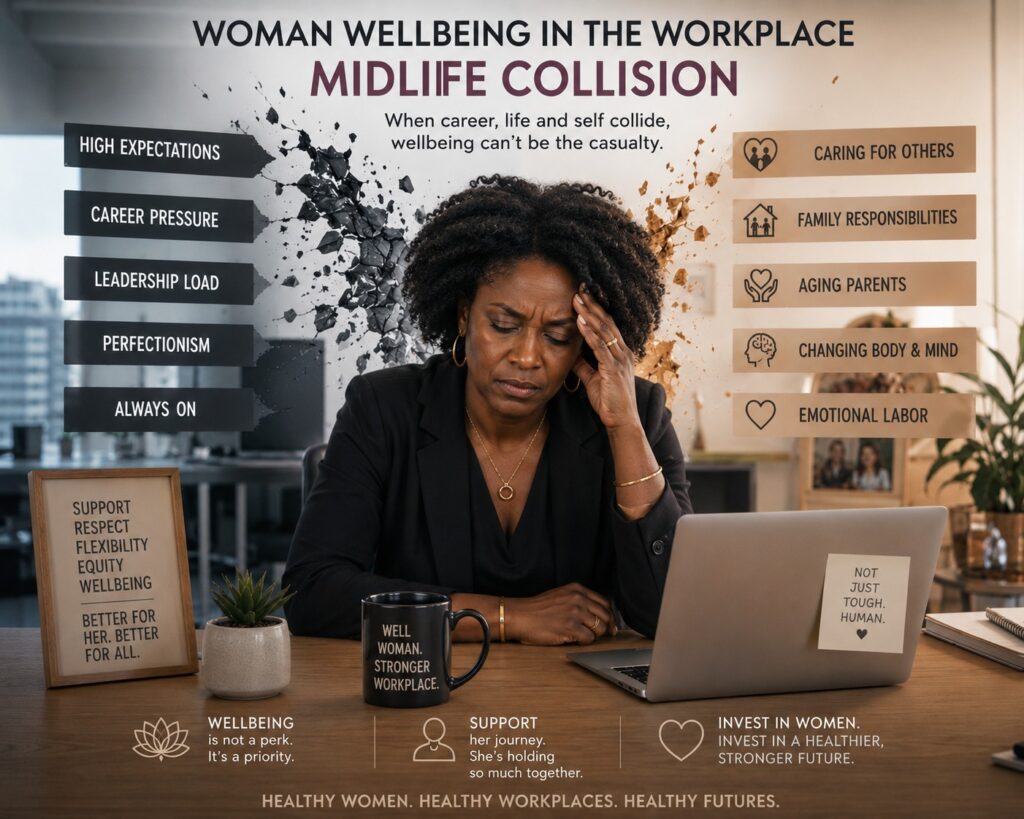
Women’s well-being in the workplace is a critical topic, as it encompasses a variety of physical, mental, and emotional factors that directly impact productivity, job satisfaction, and overall health. Supporting women’s well-being in the workplace not only benefits the individual but also contributes to a more engaged, motivated, and diverse workforce, which is good for the organization’s success. Menopause can certainly impact work performance, both directly and indirectly, as women navigate the physical, emotional, and psychological changes associated with this life stage. These effects can sometimes feel like a collision between the old version of oneself (how one used to perform at work) and the new reality (how one might be experiencing work now). Understanding and managing this shift is crucial, not only for maintaining performance but also for fostering well-being in the workplace.
How Menopause Affects Work Performance
1. Cognitive Changes (Brain Fog and Memory Issues)
- Memory lapses and difficulty concentrating are common during menopause, often referred to as “brain fog.” This can affect:
- Task completion: Difficulty recalling details, remembering instructions, or tracking progress on projects.
- Decision-making: Feeling less sharp in making judgments or prioritizing tasks.
- Communication: Struggling to find the right words during meetings, presentations, or written communication.
- Impact on work: Tasks that require focus, attention to detail, and complex problem-solving may become more challenging, leading to slower productivity or a drop in performance quality.
2. Physical Symptoms (Fatigue and Sleep Disruptions)
- Fatigue: Hot flashes, night sweats, and disrupted sleep can lead to chronic tiredness during the day, making it difficult to stay alert or energized throughout the workday.
- Impact on work: Fatigue can reduce concentration, decision-making ability, and overall productivity. In jobs that require energy or a high level of engagement (e.g., client-facing roles, leadership positions), this may lead to decreased effectiveness and motivation.
3. Mood Swings, Anxiety, and Stress
- Emotional changes: Hormonal fluctuations can cause mood swings, irritability, anxiety, or even depressive symptoms.
- Impact on work: This can affect:
- Interpersonal relationships: Increased irritability or anxiety might cause strain in relationships with colleagues, supervisors, or clients.
- Workplace behavior: A more reactive or emotional approach to challenges, conflicts, or feedback might emerge.
- Decision-making: Emotional fluctuations may lead to impulsive or rash decisions, impacting judgment and problem-solving abilities.
4. Perception of Self and Confidence
- Self-esteem: Menopause can challenge self-image, particularly when combined with societal expectations around age, appearance, and vitality.
- Impact on work: A decrease in confidence can affect a woman’s willingness to take on leadership roles, assert herself in meetings, or pursue career advancements.
- Imposter syndrome: Some women may feel disconnected from their previous, more confident selves or experience imposter syndrome—feeling that they are not as capable as they once were, even if performance has not objectively declined.
5. Sexual Health and Workplace Dynamics
- Intimacy and personal relationships: Decreased libido or changes in sexual health during menopause may indirectly impact energy levels, mood, and interactions with colleagues or supervisors.
- Impact on work: While not as direct as cognitive or physical changes, the overall impact of feeling less confident or more emotionally withdrawn could influence how comfortable a woman feels in professional settings.
6. Role Reassessment and Motivation
- Reevaluation of life goals: Menopause can prompt a deep reflection on one’s career, purpose, and what’s important in life. This may cause a shift in priorities, leading some women to want to work less or reframe their professional role.
- Impact on work: This shift in perspective can lead to a decrease in motivation or drive, as the individual contemplates new possibilities in personal and professional life, or it might inspire them to reorient their career toward something that feels more aligned with their evolving values.
Navigating the Midlife Collision at Work
Recognizing and addressing these challenges proactively is essential for maintaining well-being and performance at work. Here are strategies both individuals and organizations can use to manage menopause’s impact on work performance:
1. Open Communication
- With colleagues or managers: Having open, honest discussions about menopause (if comfortable) can reduce the stigma and help colleagues understand any temporary changes in performance. Flexible work arrangements can sometimes be a helpful accommodation.
- Workplace support: Some companies offer Employee Assistance Programs (EAPs) or workplace wellness initiatives that address mental health and well-being, which can help women manage stress, mood swings, or anxiety related to menopause.
2. Mindful Time Management and Task Prioritization
- Take regular breaks: Fatigue and brain fog can be alleviated by taking breaks throughout the day, even short 5-10 minute walks or stretches. These short intervals can improve focus and reduce exhaustion.
- Prioritize high-focus tasks: Plan tasks requiring high mental focus and creativity during times of the day when energy and concentration levels are at their peak (e.g., early morning or after a break).
3. Physical Health Management
- Address physical symptoms: Staying hydrated, eating balanced meals, and getting enough sleep can help reduce fatigue and manage physical symptoms like hot flashes. Regular exercise can also boost mood and improve cognitive function.
- HRT or alternative therapies: Consulting a doctor about the possibility of hormone replacement therapy (HRT) or alternative treatments like acupuncture, herbal supplements, or mindfulness practices may help alleviate some of the symptoms of menopause.
4. Reframe Your Career Goals
- Set new goals: Menopause can be a time for career reflection and resetting professional goals. If motivation is waning, consider rethinking your career trajectory. Maybe it’s a good time to pursue new challenges, mentor others, or take on roles that offer more flexibility or autonomy.
- Work-life balance: Focus on achieving better balance between work and personal life, which may involve redefining your professional boundaries, reducing workload, or shifting priorities toward activities that bring fulfillment.
5. Cognitive and Emotional Support
- Mental health resources: Therapy or counseling can help manage mood swings, anxiety, or depressive symptoms that may arise during menopause. Cognitive behavioral therapy (CBT) can also help with negative thoughts about self-worth or imposter syndrome.
- Mindfulness and stress reduction: Meditation, yoga, or breathing exercises can be excellent tools for reducing anxiety and improving concentration and mental clarity at work.
6. Supportive Workplace Environment
- Flexibility and accommodations: Employers can support menopausal employees by offering flexibility in work hours, remote work options, or creating a more comfortable work environment (e.g., better ventilation to manage hot flashes).
- Training for managers: Educating leaders on menopause-related challenges can help them create a supportive, understanding environment where employees feel comfortable seeking accommodations when needed.
In Conclusion: Empowering Yourself and Your Workplace
The “midlife collision” of menopause and work can be a challenge, but with the right tools and support, it doesn’t have to derail career success or overall satisfaction. Understanding how menopause impacts performance, managing symptoms effectively, and seeking both personal and professional support can help navigate this transition with confidence. Ultimately, menopause can also be an opportunity to rediscover what truly matters, reprioritize your life goals, and continue to grow both personally and professionally. For many women, the changes brought on by menopause prompt a period of reinvention, a chance to redefine one’s identity, career, and relationships in a way that feels more authentic and aligned with new life stages.
By Eva Gichuki